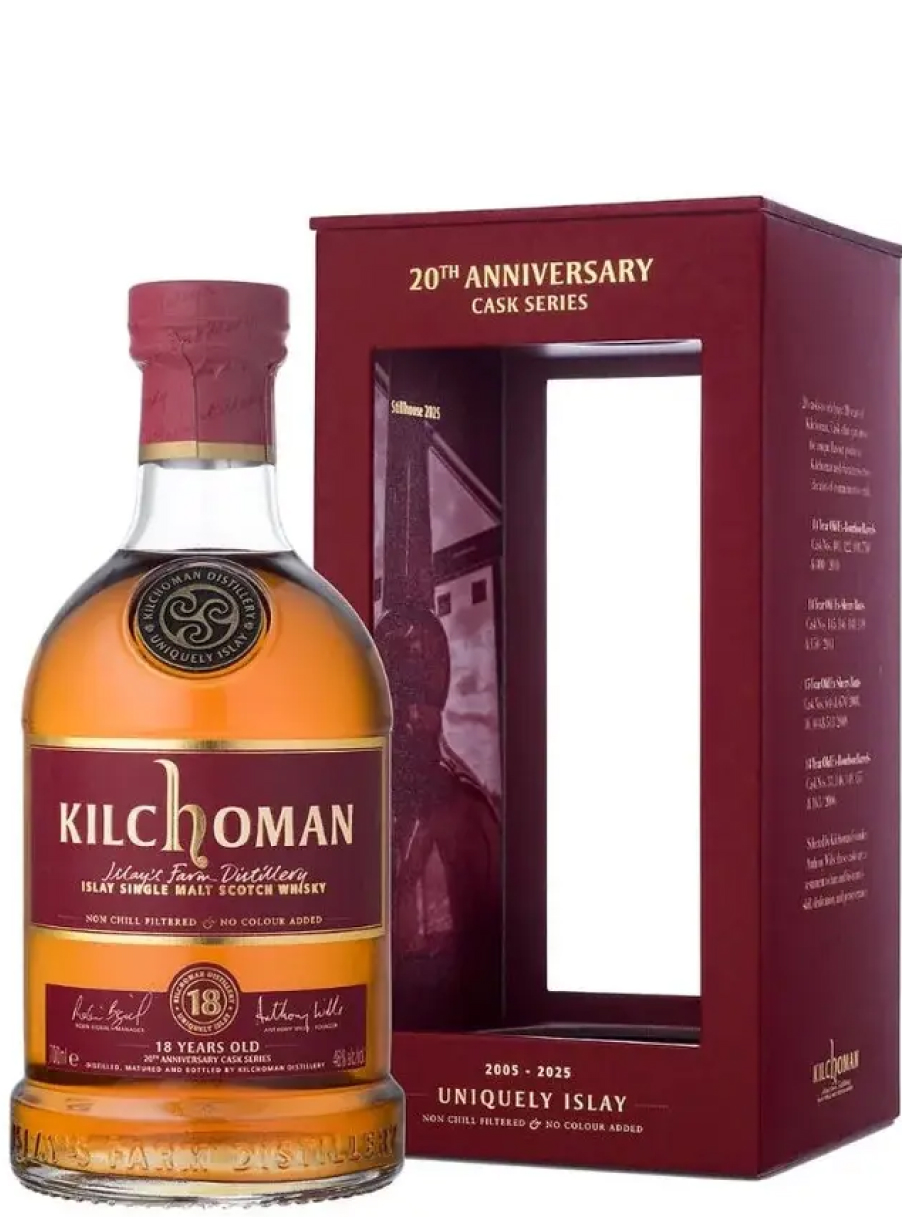
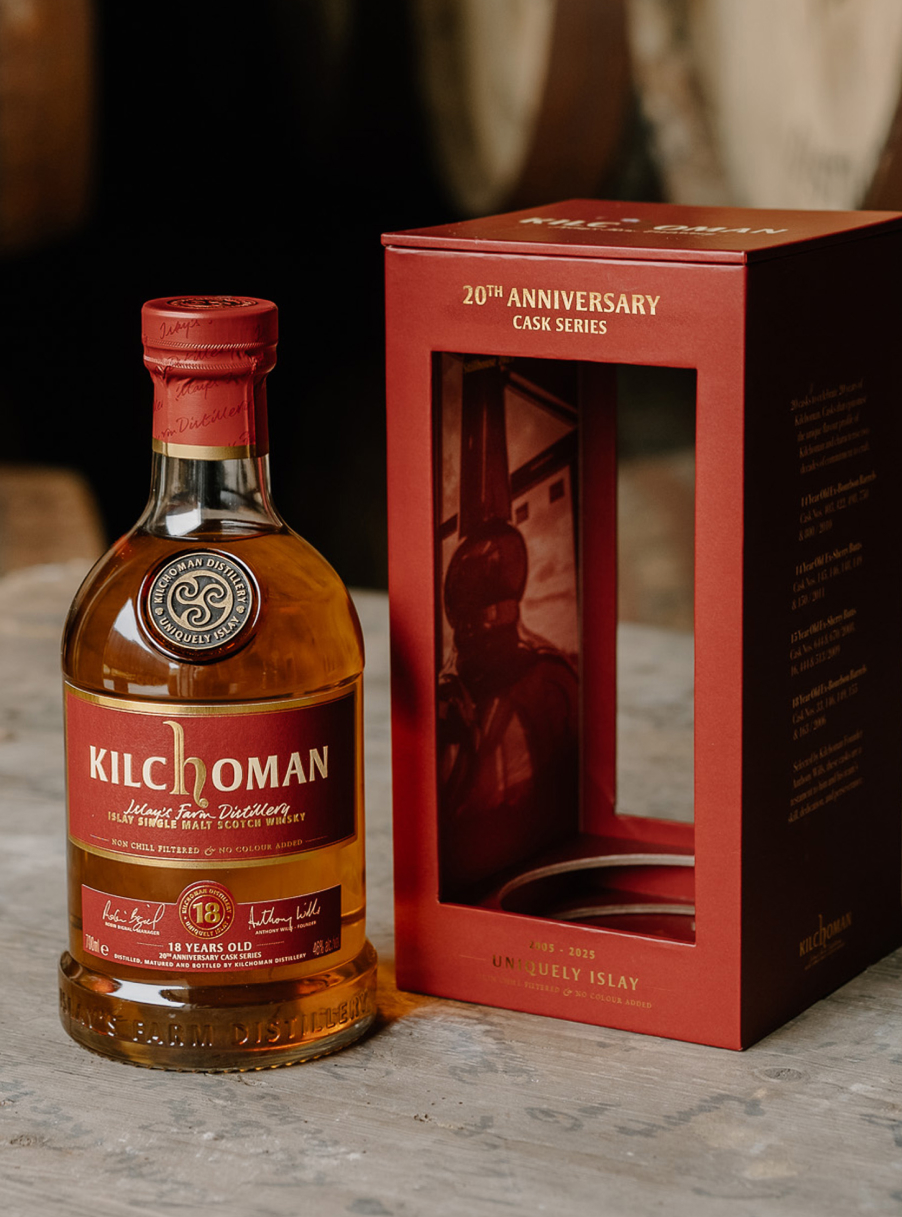
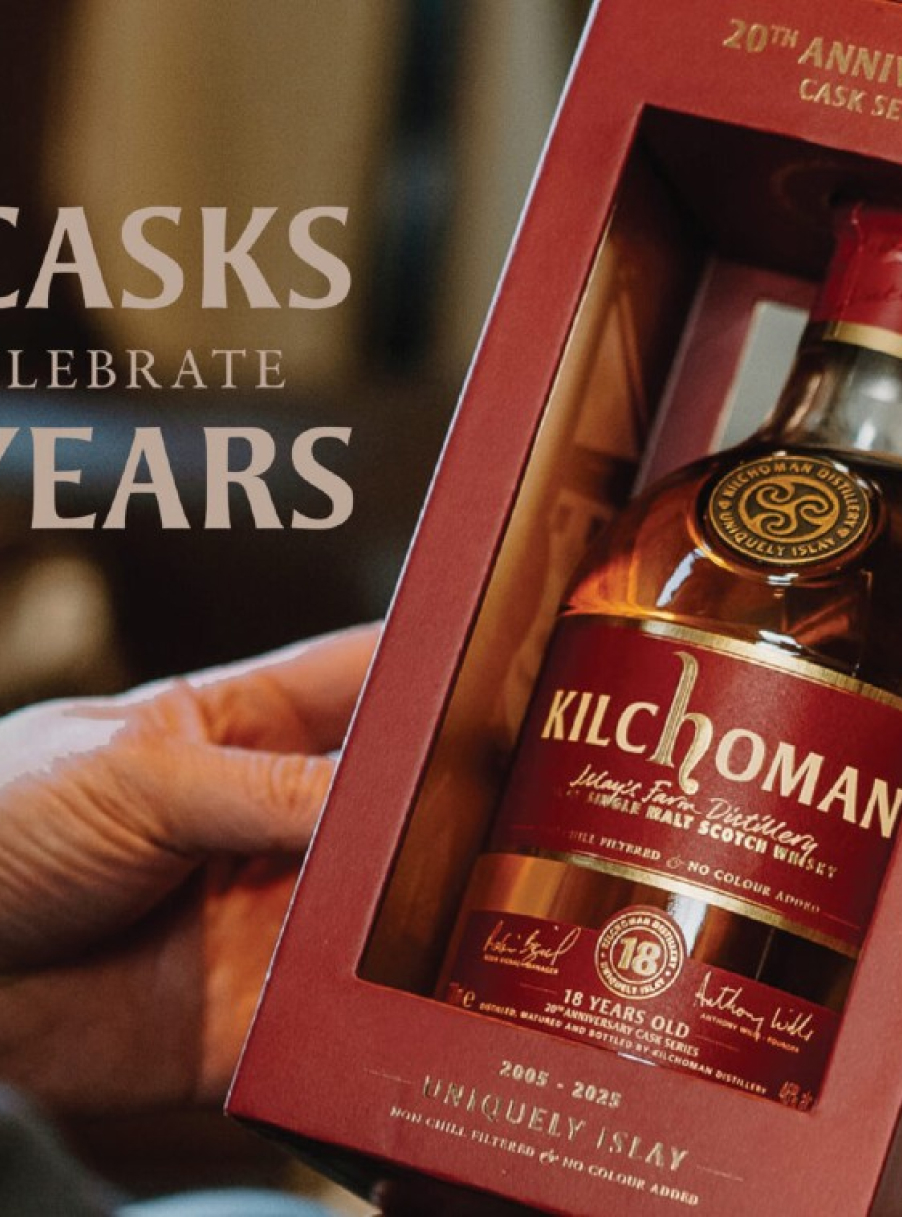
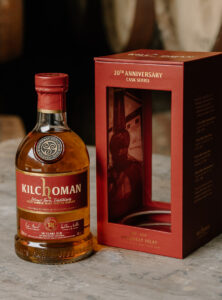
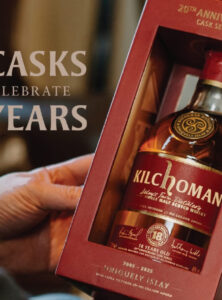
Kilchoman 18 Year Old Bourbon Cask is an exclusive single malt from Islay, released as part of the distillery’s 20th anniversary series. This whisky is Kilchoman’s oldest bottling to date and represents the distillery’s most refined expression. It is fully matured in ex-bourbon casks from 2006 and bottled at 46% without chill filtration and with no added colour. The result is an elegant balance of sweetness, cask influence, and Kilchoman’s signature maritime smoke.
Nose: Butterscotch, vanilla, and coconut with a light smokiness. Palate: Caramel, spiced apple, and salted wood. Finish: Long and warming with honey, sea breeze, and sweet smoke.
The whisky has been matured for 18 years in five carefully selected ex-bourbon casks from 2006. It is bottled as part of Kilchoman’s 20th Anniversary Cask Series, non-chill filtered and with natural colour to preserve authenticity and complexity.
About Kilchoman Distillery Kilchoman is Scotland’s only farm distillery and is located at Rockside Farm on the north-western side of Islay. Here, the distillery grows its own barley by Machir Bay and is also the only distillery on the island to both grow and malt barley from Islay for its whiskies.
Kilchoman was founded in 2005 and released its first whisky in 2009. It is classic Islay, with clear and elegant notes of the peaty smoke that Islay is so beloved for. What makes Kilchoman unique, however, is that the distillery’s whiskies often carry a slight hint of citrus, adding a touch of freshness to the dram.
20% of the malt comes from the distillery’s own barley, and only single malts are produced – meaning no whisky is made for blends. In general, these are whiskies that can and should be enjoyed young, with a fresh and lively character and a saline edge. This is due to the peat having been washed over by salt water for centuries.
The whisky ferments for a minimum of four days, or 50 hours. After this, the yeast dies, and this is the point where most distilleries stop the fermentation. Kilchoman continues for longer, creating a secondary fermentation and more esters. Small stills are used, and the spirit is double distilled.