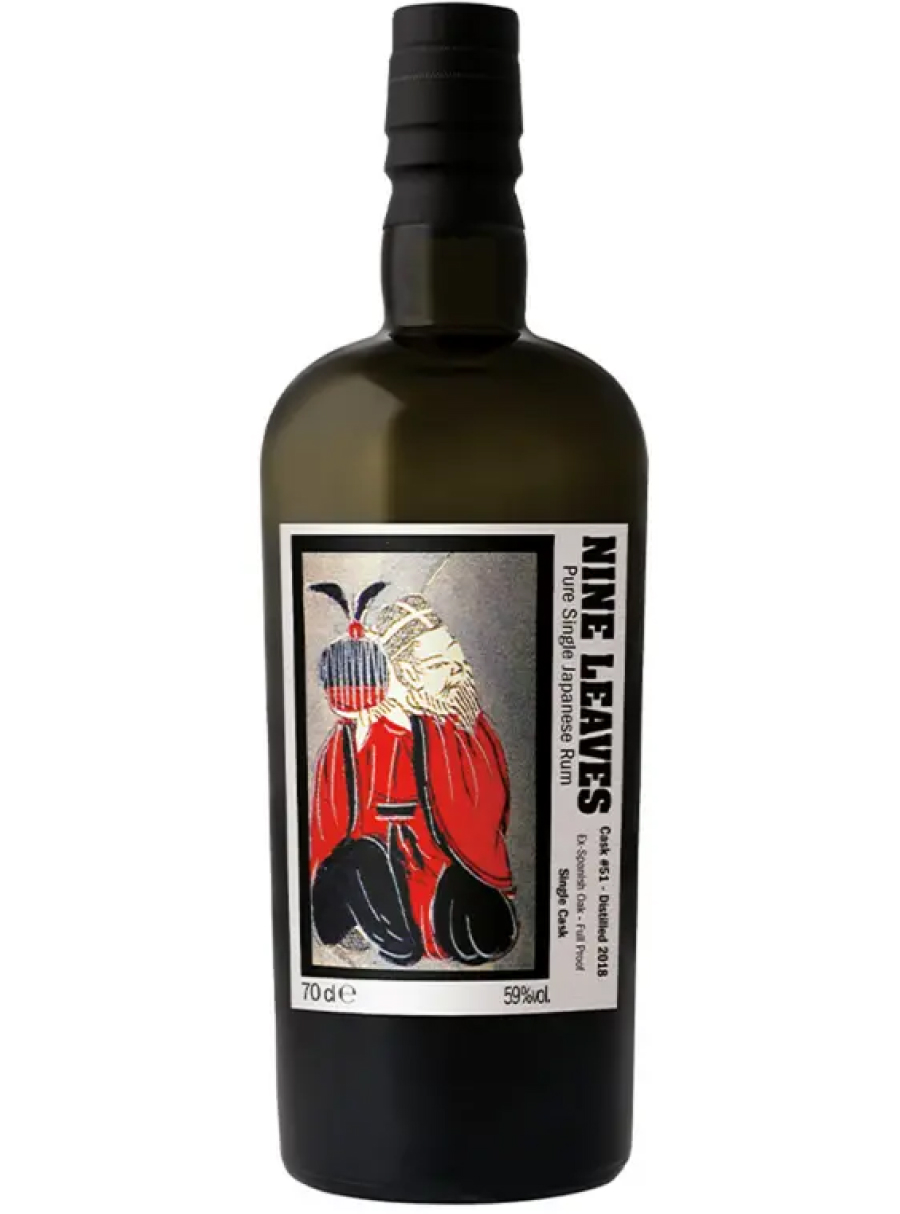
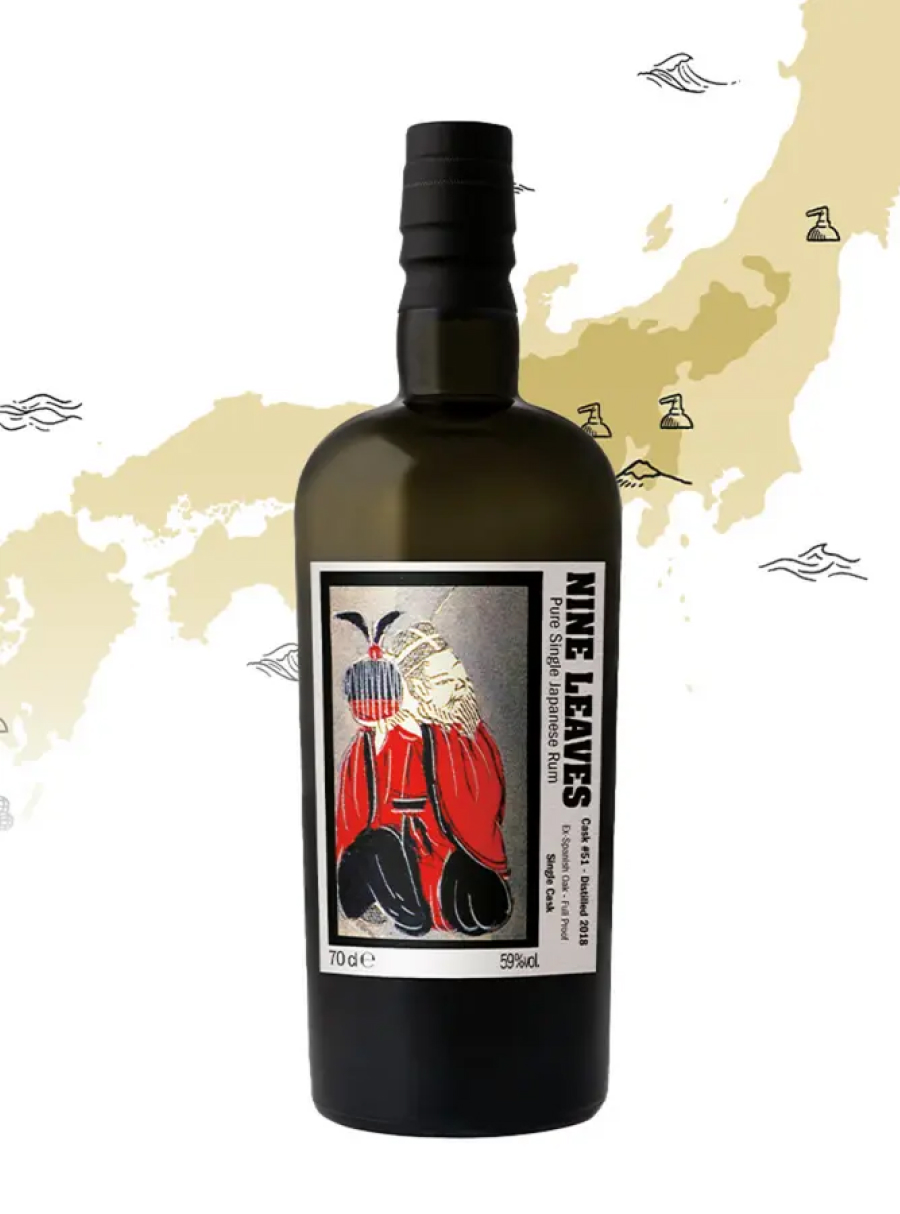
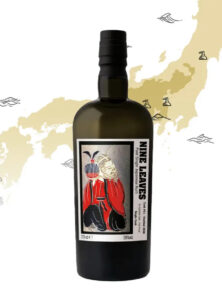
The ageing of the rums crafted by Yoshiharu Takeuchi, founder of Nine Leaves, takes place either in a warehouse where temperatures swing dramatically with the seasons, or in a disused former mine whose very high humidity and very low temperatures recall a traditional Scottish earthen-floor dunnage warehouse. Impressive, original, baroque, vibrant, generous, timeless, poetic—these are just a few adjectives that suit this out-of-the-ordinary release, whose aromatic and flavour spectrum invites you into truly unusual territory.
About the producer: Nine Leaves was a Japanese micro-distillery founded in 2013 by Yoshiharu Takeuchi in Ōtsu, Shiga Prefecture (near Lake Biwa). It became known for uncompromising craftsmanship, genuinely small batches, and a clear inspiration drawn from the single malt world, including double distillation in Scottish-style pot stills. Takeuchi closed the distillery at the end of 2023, and the remaining stocks were subsequently taken over by La Maison & Velier.
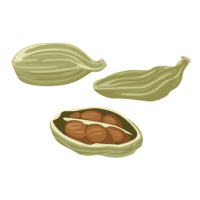
Nose: Broad and deep. Absolutely stunning: medicinal notes (bandage), nobly spiced tones (cardamom, saffron), fruit (blood orange, roasted mango), terpene/mineral nuances (lava), and autumnal accents (walnut and roasted chestnut) of rare intensity. With aeration it moves into even more mature registers dominated by fig, incense, cocoa powder, and Havana/tobacco.
Colour: Burnt sienna.
Palate: Rich and suave. On entry, pine resin, burnt cane sugar, and notes of tar/bitumen and camphor underline the palate’s strong personality. Pleasingly saline, liquorice-led and mineral (think “salmiak”), it becomes increasingly powdery, rooty and exotically spiced (curry, turmeric).
Finish: Dense and full-bodied. With striking realism it evokes the sensation of chewing on a liquorice stick, then reveals sandalwood and incense that add a distinctly mystical dimension. Remarkably fresh in the after-aroma, it becomes a delicious pretext for lingering over cardamom tea. The empty glass turns balsamic—cedar, pine, and herbal-candy notes reminiscent of “bonbon des Vosges.”