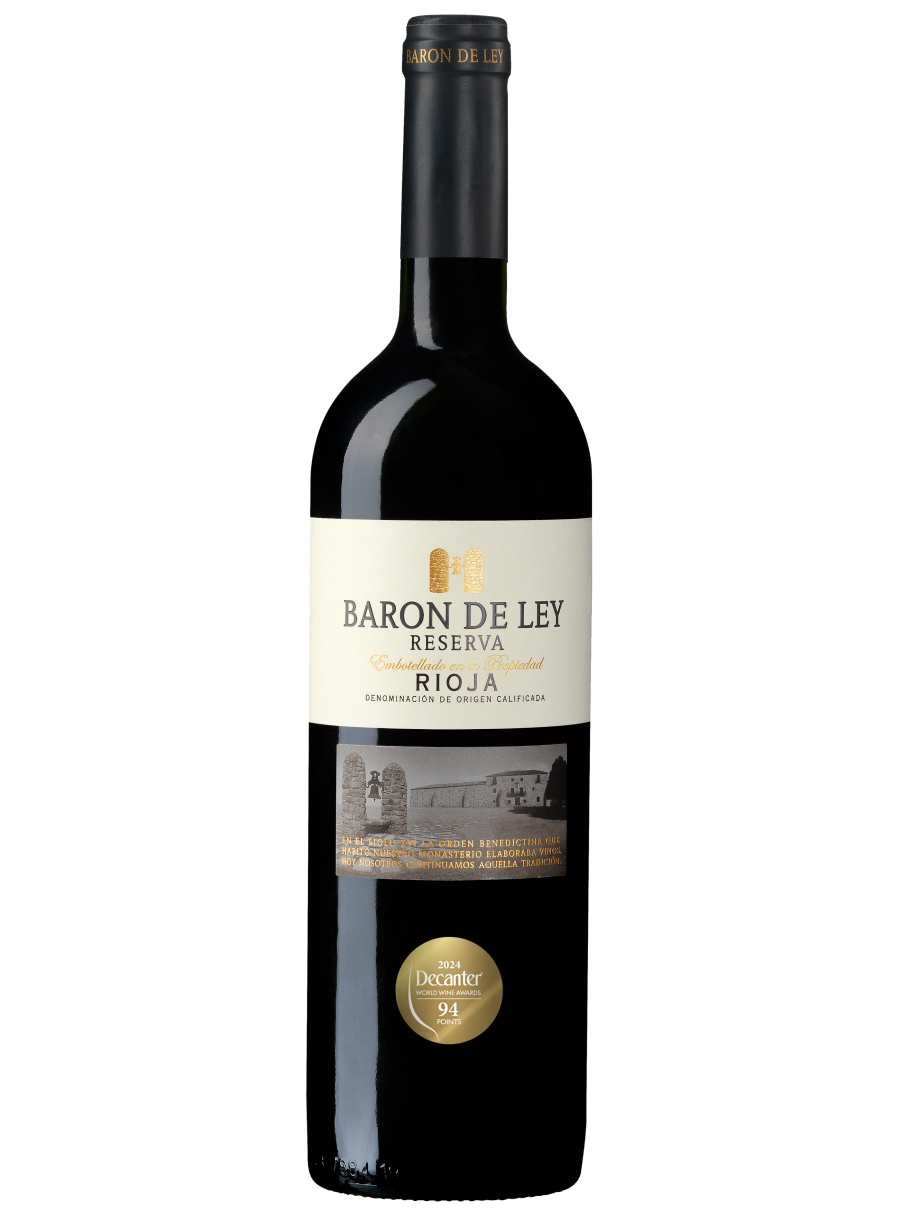
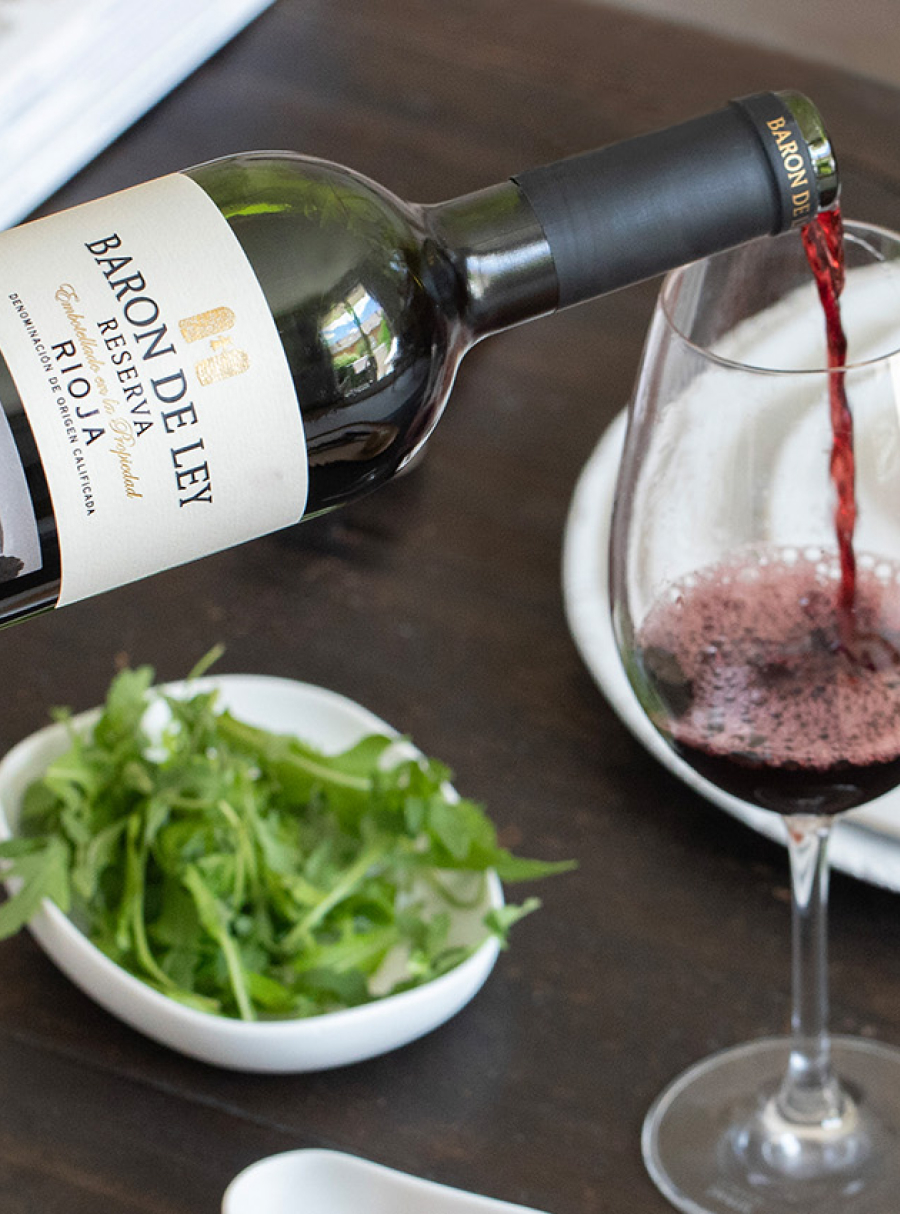
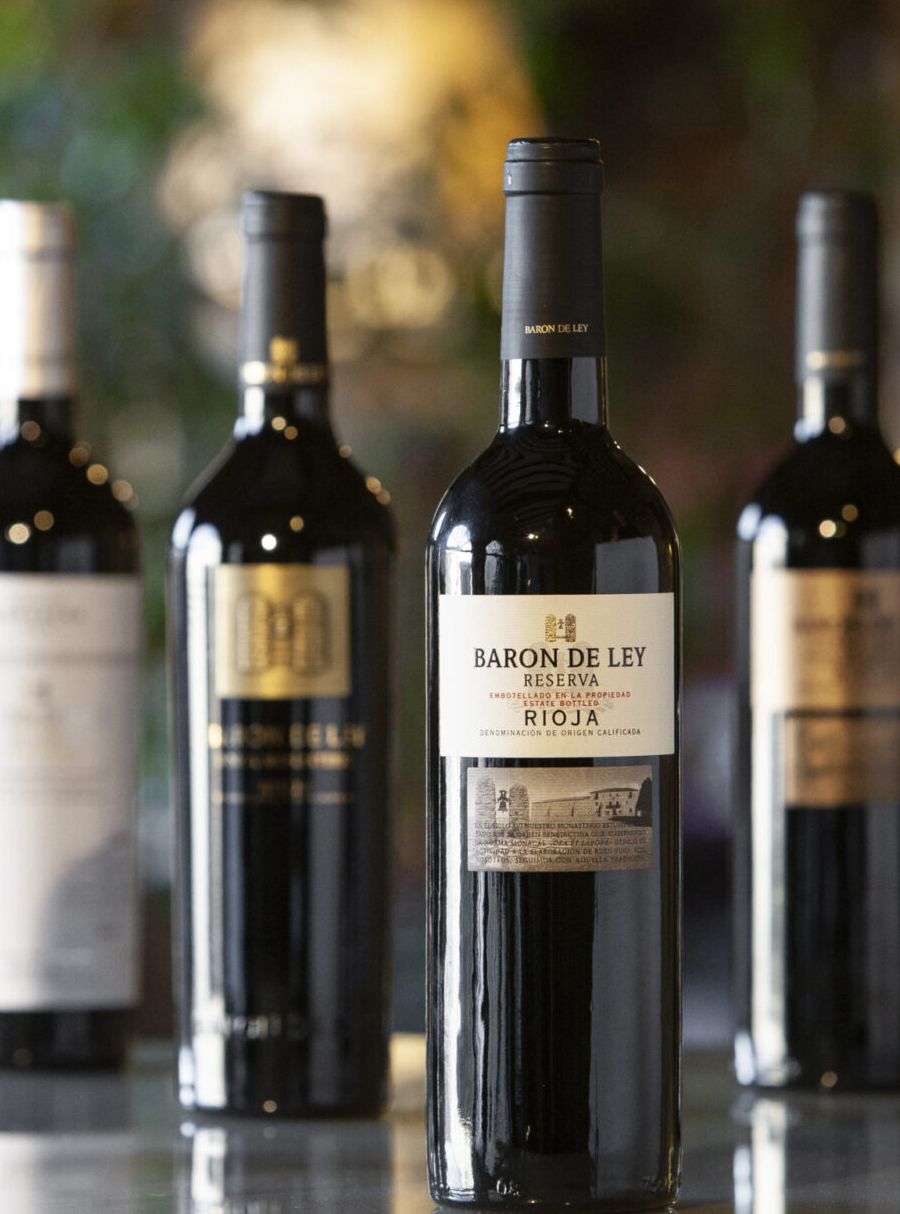
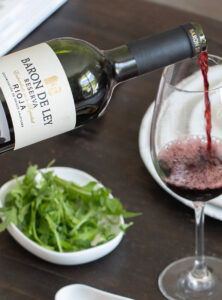
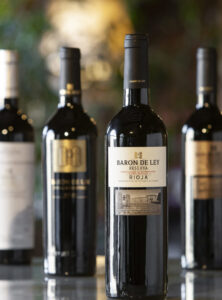
Barón de Ley Reserva is a classic yet modern Rioja, combining ripe fruit with elegant oak spice and a smooth, velvety texture. The style is unmistakably “Reserva”: Tempranillo forms the backbone, typically complemented by small proportions of local grapes that add freshness, spice and depth. The result is a Rioja with a clear sense of place and a beautifully balanced profile—equally at home with a relaxed Sunday roast or a more refined meat dish.
Origin and terroir
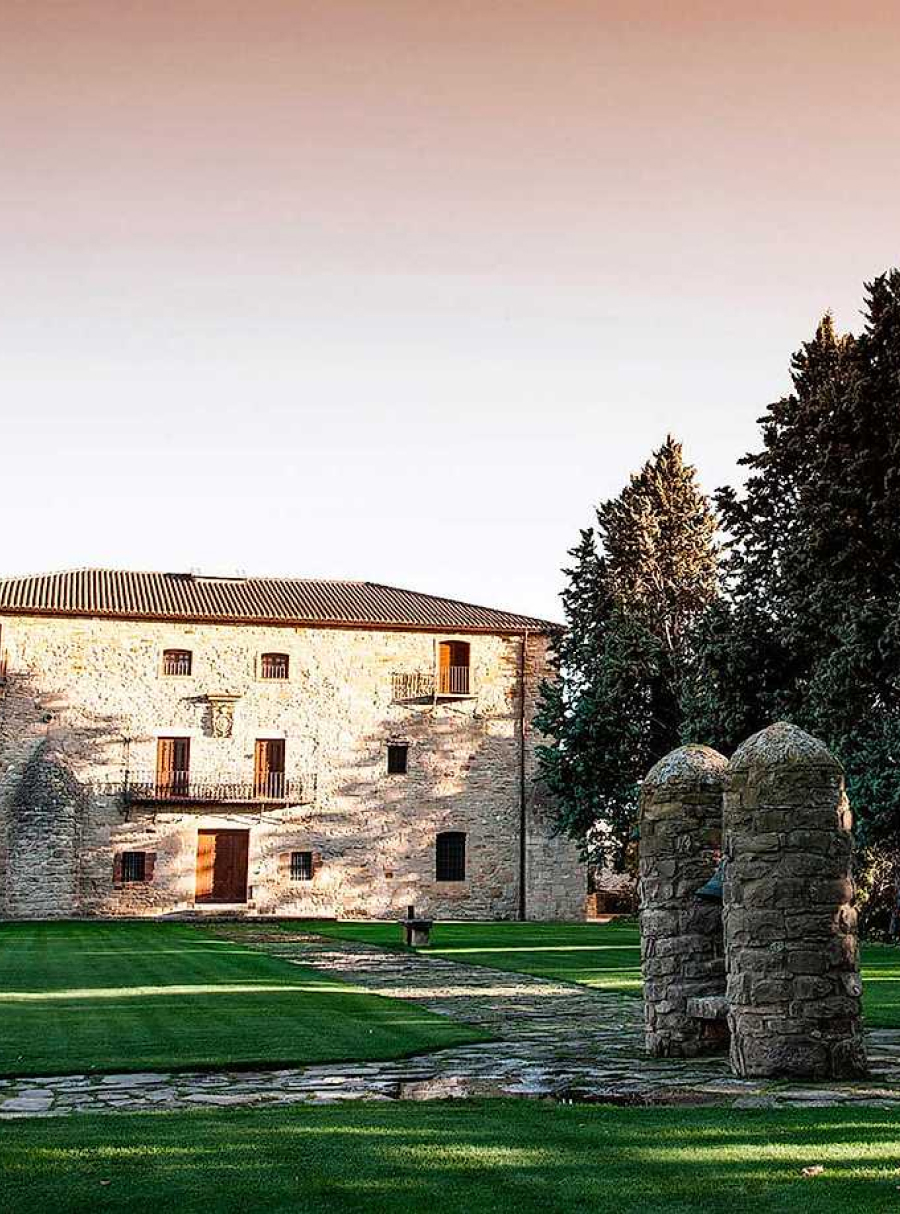
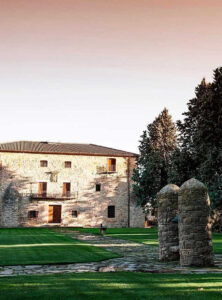
The wine comes from Rioja DOCa, sourced from the producer’s own vineyards in Rioja Oriental. The warmer, sunnier climate influence brings a generous fruit character and excellent ripeness, while the winemaking aims to preserve freshness and elegance. This creates a Rioja that feels both rounded and refined.
Grapes
Tempranillo is the core grape, often supported by small amounts of Graciano and Maturana, contributing aromatic lift, spicy detail and structure.
Winemaking and ageing
The grapes are harvested and selected before fermentation in temperature-controlled stainless steel tanks, maintaining fruit purity while carefully extracting colour and tannin. The wine is then aged for an extended period in oak and further matured in bottle, allowing tannins to soften and the oak to integrate. This classic approach delivers the signature Reserva profile—subtle vanilla, tobacco and sweet spice—without overshadowing the fruit.
Aroma and palate
The nose is layered and gently spicy, showing red and dark berries—cherry and plum—followed by hallmark Reserva notes of tobacco, coffee/chocolate, vanilla and a hint of balsamic character. On the palate it is medium-bodied to full-bodied, with ripe tannins and a rounded, creamy feel that prioritises harmony and length over sheer power. The finish is long and polished, lingering with fruit, herbs and refined oak spice.
Serving
Food pairing
Barón de Ley Reserva is highly food-friendly, especially with dishes where both fruit and oak seasoning can shine.
Excellent with:
-
grilled or roasted beef, lamb and game
-
pork with herbs, mushrooms or roasted flavours
-
slow-cooked dishes and hearty stews
-
tapas with cured meats and aged cheeses (Manchego is a natural match)
Ageing potential
Enjoyable now thanks to its smooth structure, but it will also reward cellaring. With a few years of bottle age, the wine develops more tertiary notes—leather, tobacco and dried fruit—while the tannins become even more silky.